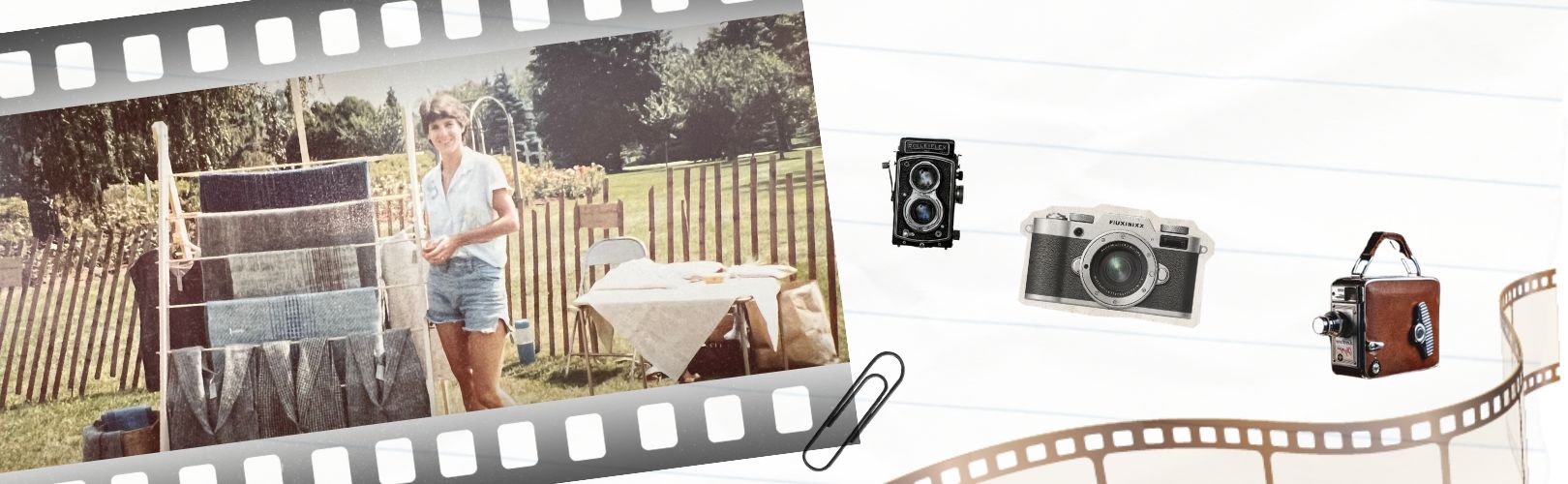
Cameras had been part of my life long before I owned a Canon AT-1.
My father had one of those small 8mm movie cameras.
He took it on all our family camping vacations.
There are films of me splashing around in the Peabody River at Dolly Copp and climbing Pine Mountain. When I was too little, my father would put me on his shoulders and carry me part of the way.
I still remember how proud I was the first time I made it all the way to the top by myself.
In the winter after Sunday supper, out came the projector and we’d watch those films together.
“Oh, remember that?”
“Look at Mom stumbling in the creek!”
It was great fun . . . until we became teenagers.
Those old films were pulled out whenever a serious boyfriend came to visit.
They did it to my older sister when her future husband showed up.
And they did it to me.
Believe me, there is nothing quite like sitting beside your boyfriend watching a film of your baby self running down the street with diapers around your ankles. 😂
Years later at Ryerson, I needed a camera for a photography class.
I’d never owned a really good one. So when I got the Canon AT-1 I remember thinking,
Wow. Wonder how this works?
How does this camera capture what I see with my eyes?
I discovered they are not the same.
So I started experimenting.
Different f-stops. Different exposures. Different depths of field.
Variations of the same photograph just to see what changed.
It got expensive pretty quickly, so I was happy when the fellow at the camera shop suggested contact sheets.
Rather than individual prints, the film was developed as a sheet of little images you viewed through a magnifying glass to compare.
Too dark.
Too light.
Wrong focus.
Many didn’t make the cut to become prints.
I also discovered that people who are really interested in a topic are usually more than happy to share what they know when they realize you’re interested too.
Every time I went back to the camera shop, I’d tell him what I’d tried.
“I did this. Then I tried that.”
And we’d have a discussion about what happened and other variations to try.
I probably learned more from discussing my pictures with him than I did in the photography class.
After Ryerson I started a hand-weaving and clothing design business.
I was applying to juried craft shows and galleries and needed good photographs of my work for my portfolio.
My girlfriend Carol agreed to be my model.
That’s when I started noticing context – how much the surroundings changed the feel of a photograph of a winter coat. Outside was definitely better than inside.
Gradually, I got better at seeing what belonged in the photograph – and what was getting in the way.
I carried that Canon around for years, right into the digital age, when my camera became an iPhone.
The technology has changed and I’m still experimenting with what the camera sees.
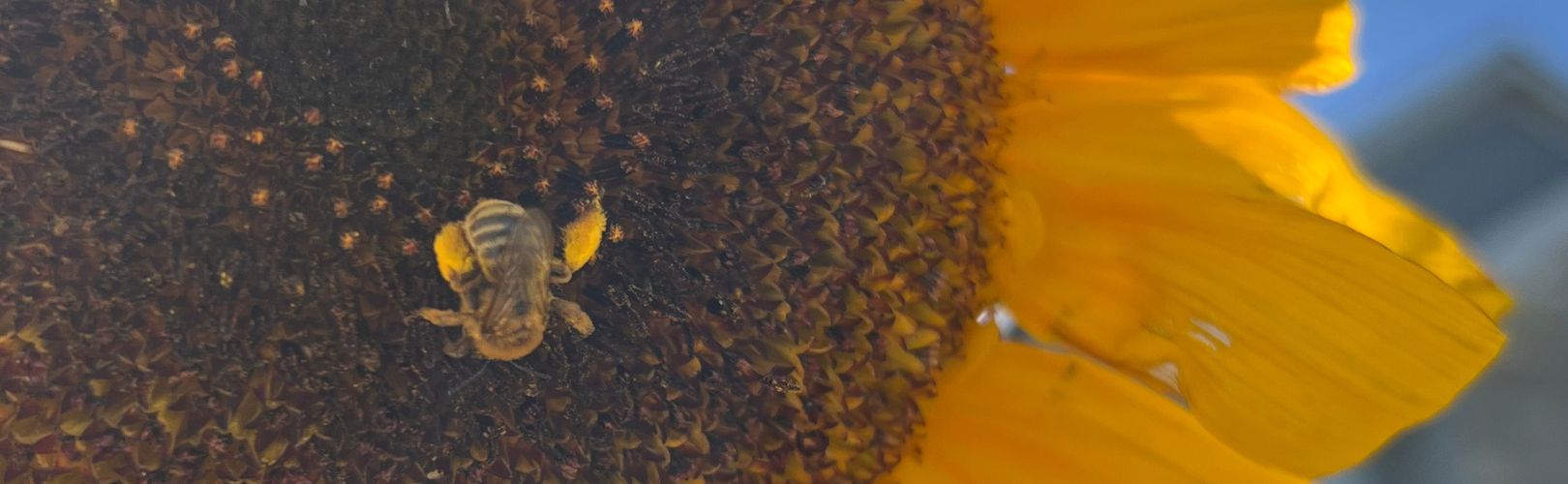
Yesterday it was a bee on a sunflower in my garden with its little “pollen pants.”
I’m still curious.
What about you? How do you capture the world you see?
Is it through photography, or do you prefer writing?
I’d love to know Email me
Cheryl Scoffield
Business Structure Strategist | Certified Kajabi Specialist
I work with experienced experts 50+ at distinct moments – from positioning your expertise for independent practice, to LinkedIn positioning, to implementation – depending on where clarity already exists.
Helping experienced professionals translate expertise into opportunity.